Monday, May 14, 2012

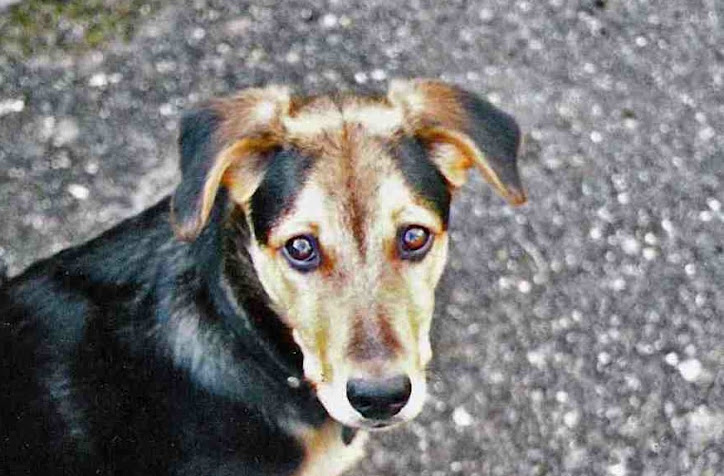
Let's find Ray the puppy a home!

If ever there was a deserving case this is it.  Little Ray was hours from death as he lay unconscious in someone's house.  At only 6 weeks old he had been hit by a motorbike and it was his good fortune that the SOS Cats & Dogs free clinic was happening that week.  None of us were confident that he would survive, but he did and now he needs a good home.  He has been left with some problems with sight & depth perception but he is a lovely and very lively dog.  He needs someone with plenty of time to devote to him and someone with a lot of love.

Let's make this go viral!  Please like Ray's very own facebook page.  


Click on the thumbnail to read Ray's story in English, Portuguese, Italian, French, Spanish & German.  Please download it and send it to your friends.


I NEED A HOME – CAN YOU HELP ME?

My name is Ray, I am nearly 6 months old (born approximately beginning of December 2011) and I live in Sal, Cape Verde. 

They call me ‘The Miracle Puppy’ because no one knows how I survived.  I was brought to the SOS Cats & Dogs clinic in January after being hit by a motorcycle and I had already been unconscious for several days.  No one knew what was wrong with me, but everyone wanted to give me a chance.  Ines, the vet, treated me with fluids, antibiotics & vitamins & hoped for the best.  I stayed in a box in Jacquie & Neal’s house and little by little I started to wake up.  Eventually I began to be able to move around a little.  At first I could not stand up or walk, I would try & try but I would just fall down in the sand.  I was really comical and made everyone laugh!  They all thought that I would be disabled but I proved them wrong.  Now I can run, play & be naughty just like other puppies, I still have some trouble seeing clearly but that’s getting better and anyway nothing can stop me!  I was living with Izzy and she was a great foster Mum, but at the moment I have to live alone on a patio in Santa Maria.  Even though the volunteers are taking great care of me, I really need someone special in my life that I can smother with the all the love that I have inside me.  I hope you like my photos – it’s hard to get a good one because I never stay still!

CAN YOU OFFER RAY A HOME IN EUROPE?

Ray’s paperwork is almost complete and he will be ready to leave Cape Verde by the end of May.  Assistance can be given for the cost of the flight if necessary.  Ray is about 15kgs and is the height of a beagle – he probably has a little more growing to do.  Although he is partially sighted he is very enthusiastic about life!  Consequently he needs a home where he has some outside space to let off steam – he does see things but cannot always stop before he runs into them!  He does not appear to have anything wrong with him that would entail a lot of veterinarian costs, but he would need to be checked out once he is in Europe.  He responds well to whistles and is beginning to learn to walk on a lead.  He is fine with other dogs & cats but older animals might find he is a little too boisterous for them right now.  Please remember he is still very young but he is smart & capable of learning.  He has not been with young children.  He is very affectionate and would be best suited to someone who can spend a lot of time with him.

PLEASE HELP US TO GIVE THIS LITTLE SURVIVOR A SECOND CHANCE

contact Jacquie at info@cvcatsanddogs.org for more information
Visit Ray’s facebook page & please circulate this to all your friends

Thursday, February 9, 2012

Stray Animal Management Strategies

Many other countries have a much more serious problem with stray animals than we do here in Cabo Verde, so it is interesting to see how other organisations manage their populations.

SCAD based in Bangkok have published this very interesting summary of strategies that work and don't work.  Stray Animal Management Strategies.

Here also are the links to the two reports mentioned:

Guidelines for Dog Population Management W.H.O. Geneva, 1990 (page 74): ‘Removal and killing of dogs should never be considered as the most effective way of dealing with a problem of surplus dogs in the community: it has no effect whatsoever on the root cause of the problem’

Report of W.H.O. Consultation on Dog Ecology Studies, related to Rabies Control, Geneva 22-25 February 1988 (page 11): ‘In none of the studies did the elimination of dogs by any method have any significant long-term effect on dog population size’

100,000 unwanted animal births prevented.

In two weeks, veterinarians from Germany & Cape Verde performed 529 sterilisation operations on dogs and cats - an estimated 100,000 unwanted animals have been prevented from being born, plus there are huge benefits to the animal's health and life of the owners.

Read more here.

How is this number calculated?

If each animal has 6 puppies/kittens twice a year and half of them are female, who then have 6 puppies twice a year, the figure grows exponentially.

Year 1 - 529 x 6 = 3,174 births
Year 2 - 3,174 + 529 (from year 1) = 22,218 births
Year 3 - 22,218 + 3,174 (from year 2) + 529 (from year 1) = 155,526

Insane numbers that hardly seem possible!  The ONLY way is sterilisation.  Please support the association's work by writing emails or making a donation - any small amount goes a long, long way.


Thursday, January 12, 2012

2,500 less puppies will be born in 2012 in just one day of the clinic

The fourth sterilisation clinic organised by SOS Cães e Gatos (Cats & Dogs) started yesterday.  The clinic is part of a strategy to reduce the dog and cat population of Sal in a humane way.  The vets that come over from Germany are specialists in this sort of work and travel all over the world helping associations in this way.  Because they are such experts it is possible to perform many operations each day - it is almost like a production line, with the best German efficiency!  The wonderful veterinarian Ines Leuw can sterilise a female dog in less than eight minutes!

Recently there was a lot of discussion, led by the hotels on Sal, about the creation of a 'kennel' that would be built and run by the City Hall.  This kennel would be out in the middle of the desert and the dogs would be collected from the hotels and held there for an unspecified time when the owners must collect them and pay a fine.  If they are not collected then they would be killed.  This not very well-conceived plan has so many problems that it is hard to know where to start, but here are a few;
  1. Who will collect the dogs, since many strays are not approachable?
  2. Which dogs will be collected?  Will the neutered dogs be included?  How to determine if dogs are owned or not?
  3. Who will take care of the dogs?  Where will the money come from to feed & water them?
  4. What if people cannot reach the kennel or do not have money to pay the fine?
  5. How will they be killed and who would do it?  There would be no humane way since the veterinarian would not kill healthy animals.
A family of ginger kittens recovering from their operation
This 'solution' is really just a death sentence for the dogs, but in a less obvious way than the still-used practice of throwing meat laced with strychnine on the beaches.  As one hotel manager stated ' Yes, the dogs will be killed, but it will be less difficult for the tourists to deal with'.  In other words, for everyone it would be a case of out of sight out of mind.

The problem is of course that this is only a short term 'solution' and therefore not really a solution at all.  As quoted many times on this blog, the World Health Organisation states that 'no extermination of dog populations by poison, shooting or other means, has every succeeded anywhere in the world'.

Therefore the aim is to sterilise as many dogs & cats as possible and programmes such as this carried out on islands have a special chance of success.  Since there are few new dogs wandering on to the island (unless they swim from Boa Vista!), the results can be quite dramatic.  

The veterinarians at work
In just the first day 30 females were sterilised.  These 30 females could have two litters (of 6 puppies) during 2012, if 6 of these were female, they could also have 12 puppies this year.  That means in theory

30 x 12 = 360 puppies
50% female = 180 who then have 12 puppies of their own = 2,160
Total new dogs prevented in just one year = 360+2,160 = 2,520

There is no way that an extermination programme could get anywhere close to this efficiency!

Strange how the Capeverdean people who line up outside the clinics each day can follow this logic, but the mostly European hotel & restaurant owners & managers can't seem to grasp the concept!!


The clinic runs in Santa Maria (opposite the old May O'Leary's) until the 15th January and then at Africa 70 in Espargos from the 17th - 22nd.  Call 957 2162 for more information.

Wednesday, November 30, 2011

How to help the cats and dogs


So many kind visitors come to Sal and take pity on the cats and dogs they see on the street and in their hotels.  Unfortunately this is not always the best policy since large congregations of animals inside hotels causes problems with hygiene and complaints from other guests.  Not all people love animals and it can be intimidating to see large groups of dogs wandering around, especially if you are not familiar with the country.  When this happens, as for instance, on the beach at the RIU, some people feel that there needs to be an 'instant' solution, such as with the mysterious disappearance of the seven puppies that were born under a boat there about three months ago. 

Since no one wants this kind of inhumane treatment, new association SOS Cats & Dogs recommends that tourists do not feed the animals in or around hotels or allow dogs to follow them back to their hotel.  Instead guests can help by making a donation of money or much needed treatments for parasites such as fleas, ticks & mange.

The hotels also need to take some responsibility in this matter, such as limiting the access for dogs (such as erecting a fence as the Belorizonte recently did), placing information for guests & training staff.  In addition the association can supply ultra-sonic animal deterrents which discourage animals from entering the area.  Incidentally these hand-held units work really well for joggers or bike riders who don't welcome the local dogs running alongside them!

For more information email SOS Cats & Dogs

Saturday, October 8, 2011

Two years since Rasher was killed

In Ireland near where he was born
Today is a terrible anniversary for us.  At this time on 8 October 2009 we had no idea that our world was about to be turned upside down by the irresponsible actions of a single person.  Yesterday in 2009 was the day that Giorgio Chiarel, the manager of the RIU hotel in Sal authorised the Delegation of Health to place strychnine on the beach outside Sal's largest hotel.

By 5pm the following day our beautiful dog, Rasher, had eaten that poison.  By 5.10pm he had died a horrendous, painful death in the turtle hatchery in front of many of the RIU hotel's guests. 

There are some who will never understand that love for an animal can be as strong as love for another human but there is no doubt that Rasher was our family, part of our world and we will never be the same without him.  Not a day goes by without us mourning his loss.  Our lives are diminished by the sadness that we have in our hearts every day.

This is made even harder by the recent pushing by some hotels and restaurants for yet more killing of animals.  Their idea?  A kennel in the desert, thinly disguised as a humane option, but in reality a place out of the view of tourists where animals can be killed.  As one hotel manager told me "yes Jacquie, it is the same, but less hard for people to deal with or know about, since it is not happening on the beach in front of people." 

Sleeping peacefully in the turtle hatchery
Clearly not many of the managers or owners have learned anything at all.  Not only this, but they can hide their involvement since although it is the hotels and restaurants pushing the government to build this concentration camp, it would be the City Hall kennel and they can claim to have nothing to do with it.

Always happy to get a ride on the quad
Indeed, in a recent email the Public Relations Depart of the RIU head office stated that they do not get involved in this issue but must respect the actions of the local government.   Therefore, once again refusing to accept any responsibility in the death of who knows how many dogs in the years since they opened here on Sal and conveniently forgetting that it was they, not the government, who requested poison to be placed on the beach in 2009.

There is only one way to control free roaming animal populations and that is a sustained neutering programme coupled with public education.  This includes advising hotel and restaurant guests not to feed dogs (which causes animals to congregate in unmanageable groups) and closing access to premises.

Thankfully the current manager of the RIU is more enlightened and is planning on using ultra sonic dog deterrents and giving more information to guests as well as allowing the dog and cat association to fundraise at the hotel..

As for Giorgio Chiarel?  Any reprimand from the RIU hotel?  Not at all, instead a reward - the manager's job at the new RIU Touareg on Boa Vista.

Thursday, October 6, 2011

And the poisoning continues

Despite the results achieved with three sterilisation clinics (1000+ animals neutered so far), it seems the message is still not reaching some individuals, businesses and organisations.

The recent calls for the removal and destruction of free roaming dogs in Santa Maria simply has no merit.  Poorly thought out, it will no doubt be poorly executed as well.

Which dogs will be removed?  Will this include owned, registered and neutered dogs?  How long will they be held for?  Who will kill them and by what method?  (It certainly won't be by lethal injection since there is no Euthanol here and no staff trained to administer it).  Since there is no law here to say that you must keep your dog in your house or on a lead, how can this be legal?

And how will this solve the problem?  Natures abhors a vacuum.  Soon the areas where the dogs were taken from will be repopulated and the cycle begins again. 

For many it is a case of 'out of sight out of mind' and this is typical of the short-termism that afflicts many people here.  The answer?  If you don't want dogs and cats in your restaurant or hotel, close off access, ensure that food is not available and support neutering clinics.

In the meantime, it seems things are worse in the residential area of Murdeira which is notorious for poisoning animals.  Cape Verde Pets